Core Concepts
Alayo isn't another “import and you're locked in” file vault. It works beside your real files: everything on the canvas is a rehearsal, real files never change without your confirmation — and everything can be undone.
Spaces and cards: files stay put, cards move
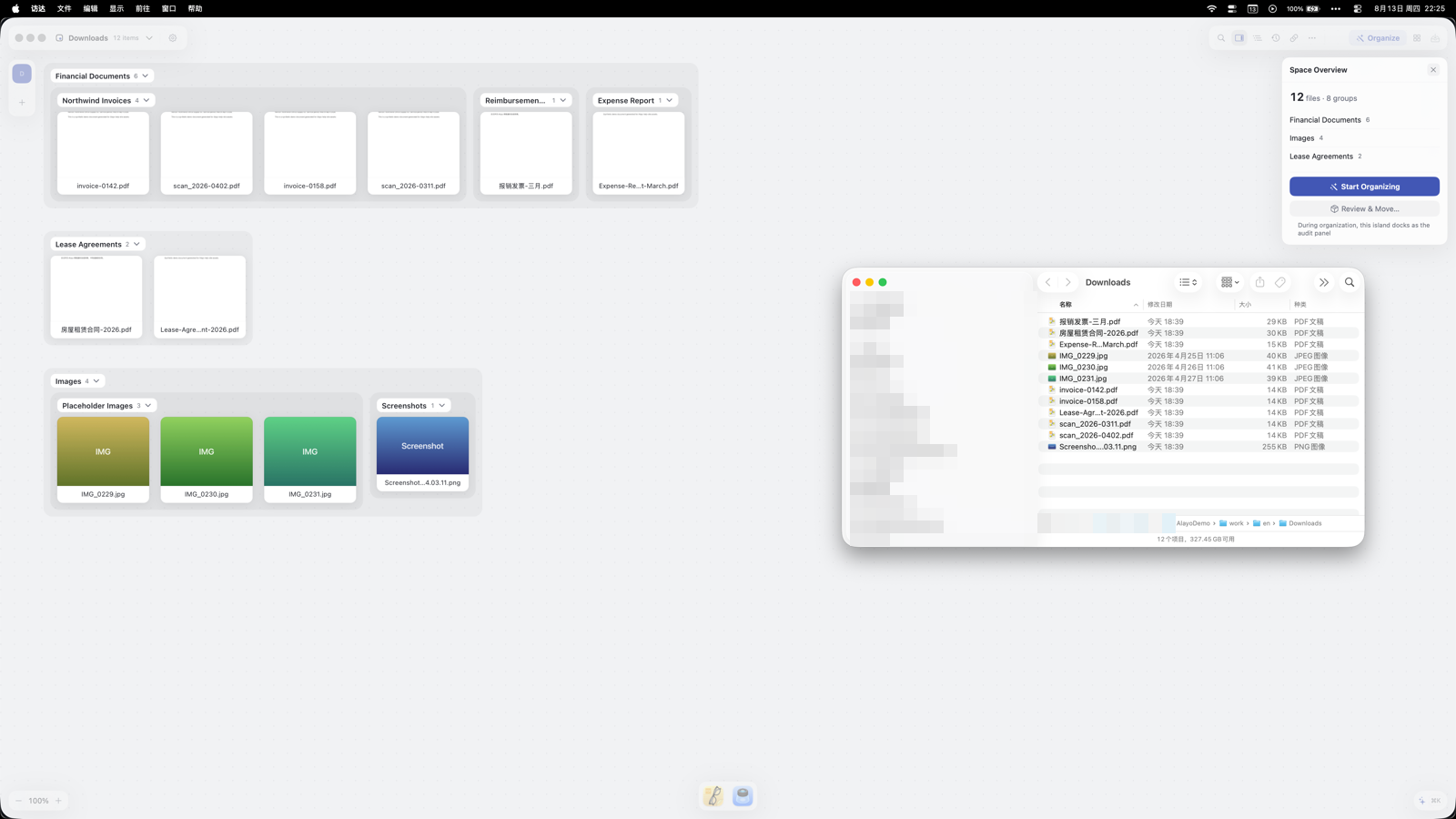
A space = a canvas + a set of cards. A card is a reference to a real file, not a copy: adding files to a space never copies, uploads, or alters the originals. The same file can live in several spaces, each with its own position and grouping.
The canvas is a rehearsal
Moving cards, grouping, renaming groups, stowing group positions — all of it happens in Alayo's virtual layer and never touches the files on disk.
That's the point of rehearsing: lay out the order you want, see if it feels right, and ⌘Z anything — without risking your real files.
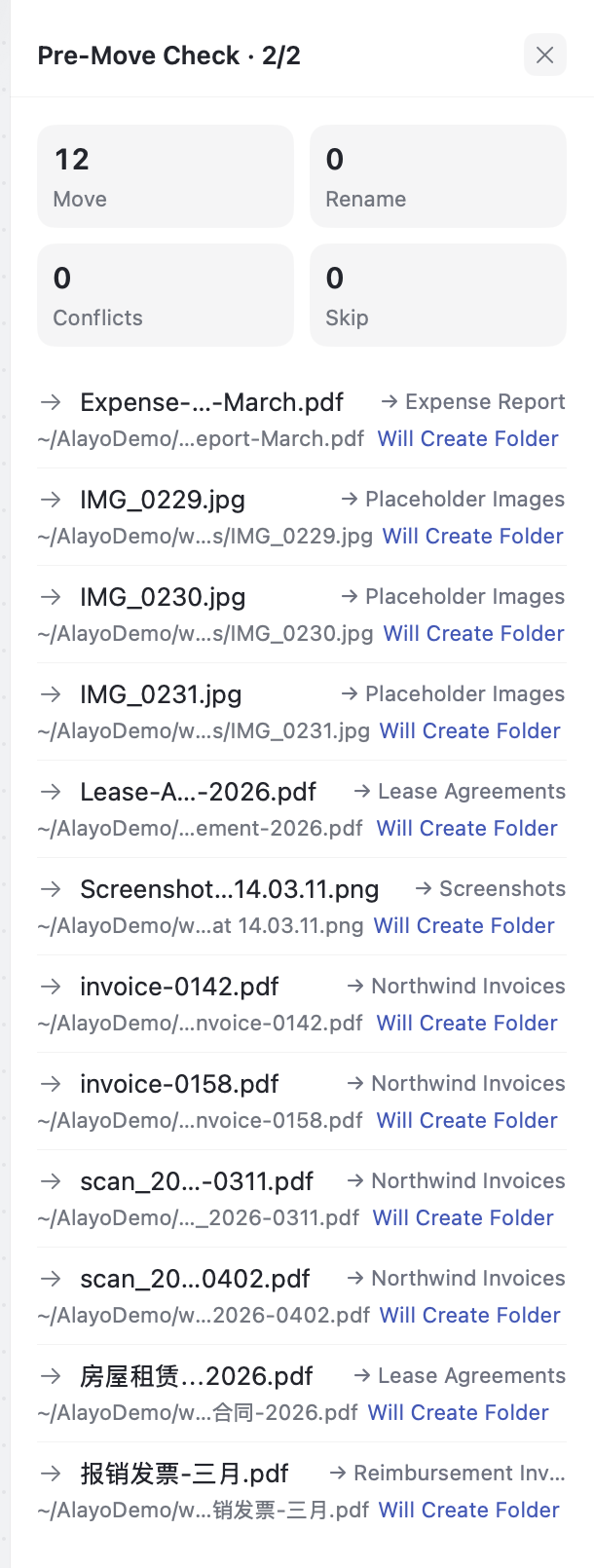
Before touching real files, Alayo always asks
Any operation that actually moves or renames files (applying) first shows you the complete list of changes: which file, from where, to where. It runs only after you confirm; discard it and nothing happens.
The same goes for AI: Smart Organize produces a proposal — suggested groups appear in the review panel first, land on the canvas only when you accept, and still pass the confirmation gate before real files move.
Everything can be undone
- Canvas changes: instant ⌘Z;
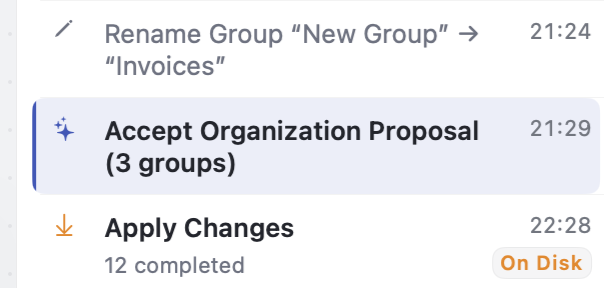
- Applied moves: records marked "On Disk" in History can be undone with one click — files return to where they were;
- Deletion always goes through Move to Trash and can be recovered — there is no irreversible delete in Alayo.
AI helps; you decide
"Smart" actions (Smart Organize, Smart Rename) are proposed by AI; "Rule" actions (Organize by Rules) run deterministically — same input, same result, every time. Both produce proposals you review.
AI uses an on-device model by default, so content stays on your Mac; see the FAQ for privacy details.